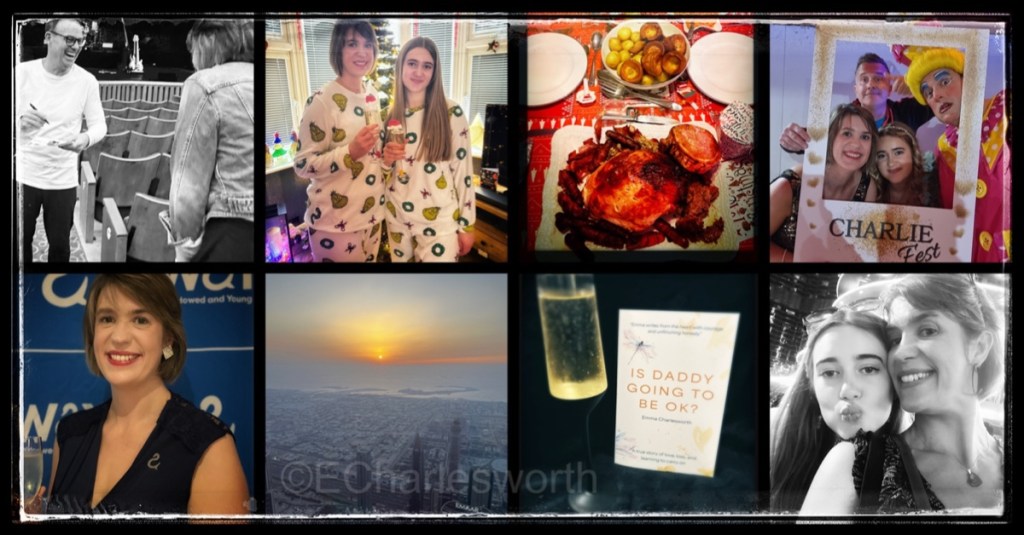
The last two years, I’ve ended my year end blog with one phrase “Never tell me the odds.” Once again so much has happened this year that I could never have predicted. Well. Aside from this sentence which I also wrote on this day last year “I already know that there are two words which will feature heavily in 2025: Jason. Excessive.” That prediction did indeed come true.
But hey, we all need a little stability in our life, don’t we? And we all know that Jason Donovan provides that stability for me! But when you’re starting a year with a heavy heart, you need things in your diary which will make you smile. And my 2025 did indeed start with a heavy heart. I’m still not properly convinced that I’ve processed how my 2024 ended and the fresh grief that came my way. I will do one day. But for now, it’s in a box. And that works for me.
Fortunately, I’d been back in therapy for a while when 2024 ended and that continued into 2025. It was the most exhausting therapy I think I’ve ever had. And it wasn’t my first rodeo when it came to therapy. I don’t claim to be a therapist, counsellor or expert but I can safely say that for me EMDR proved to be life changing this year. I still can’t properly explain it or how it works. But for me it was. And I still think I’m reaping the benefits from it. I’m not naïve enough to think I’ll never need therapy again, but for now it’s proven to be just what I needed. Despite my near capitulation that led me to it.
And just a few months later, near capitulation led me to tell my daughter she was also going back into therapy. It was a laugh a minute in my house. Hormones at play for us both while we were also both having therapy. The poor dog (who’s male) probably didn’t know quite what had hit him. But therapy and needing help has become an almost standard part of our lives since 2020. I guess if you want to live, you better figure out your life.
I don’t say that flippantly. Because when you’ve been widowed and experienced childhood bereavement, you’re in survival mode for so long. You don’t really live. It’s too difficult and painful to do so. You don’t know what your life is all about anymore. But hitting the five-year anniversary of the pandemic and my late husband’s death felt like a heck of a milestone. My daughter didn’t want to be at home for it, so we ran away on holiday to Dubai. Without a plan or laminated itinerary. Other than to be at the top of the Burj Khalifa for sunset on the actual anniversary. As we sat at the top of the world watching the sunset, a strange sort of calm came over me. It felt like the most apposite place in the world to be. I don’t really know what people must have thought of me sat there with tears streaming down my face, but that doesn’t matter. Because it doesn’t really matter what anyone else thinks. Do you. And be you.
I guess in a way that’s also what I was doing between February and the start of April. Being me. We’re back to those two words again. Jason. Excessive. I wrote a blog post about this on Jason’s birthday, so I won’t really repeat myself. Except to reiterate one thing. The memories I created during those six weeks will last me a lifetime. Even if I do now struggle to look at a chicken tender! And earnt the nickname road runner. But hey. You only live once, right?
As Ted Lasso would say: “It may not work out how you think it will or how you hope it does. But believe me, it will all work out.” I think that’s been my biggest learning across 2025. When I wrote a Facebook post six years ago today, I simply had no idea where my life was about to go. Or how it would work out. These words will always be so poignant: “As we head into 2020, there’s a lot of a variables for Family Charlesworth and who knows where we’ll be this time next year. But whatever happens, we’ll get through it. For in the words of a song I’ve heard once or twice this year… Life is a rollercoaster. Just gotta ride it.”
The variables I referenced were mainly to do with work. I was on a secondment. My late husband had been made redundant. Never did I think that a variable would be being widowed at the age of 39. My husband dying at the age of 45. My child losing her father at the age of 10. Family Charlesworth becoming Team Charlesworth. And there are no two ways about it. All the five-year anniversaries in 2025 have made me more reflective this year. But even I wasn’t anticipating quite how the year would go. The good things that went hand in hand with the challenges, heartbreak and therapy. Take for example, taking on a new role at work and leaving the comfort blanket of the familiar for the first time since my late husband fell ill. A new challenge and something for me and my future. And just a few months later taking on another new challenge by becoming a Trustee for WAY Widowed and Young. Such an honour and a way of giving back to a charity that is a lifeline for so many and so vital for me in those early days of widowhood.
Yet I couldn’t really write a year end blog this year without also referencing CharlieFest: Dress to Impress which took place to mark our 20th wedding anniversary. We raised £1,600 for Medway Maritime Hospital Intensive Care Unit and even had the fabulous Phil Gallagher (aka Mister Maker) and Ben Roddy in attendance.
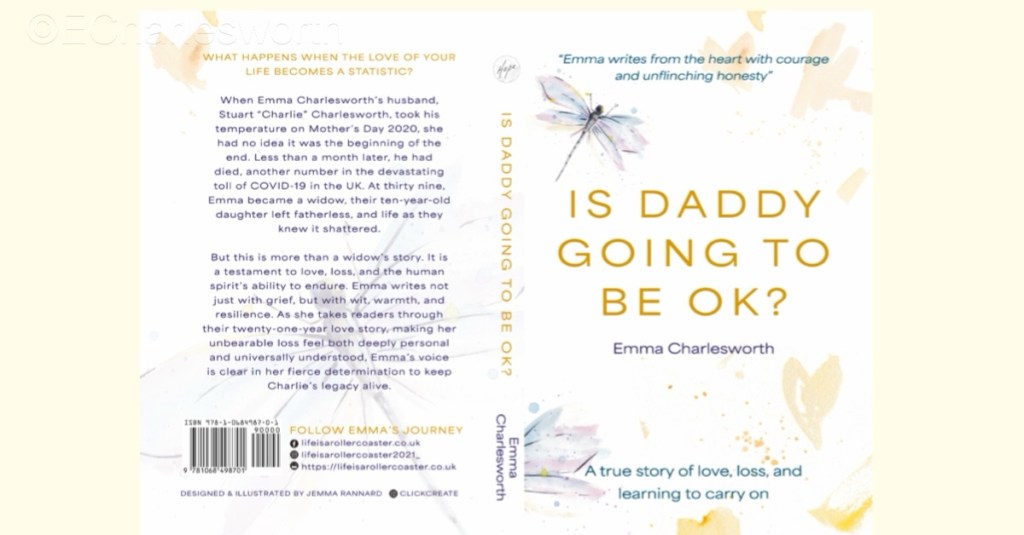
And without question. I couldn’t write this without referencing Is Daddy Going to Be OK? The book that made me a published author. The book that led to me writing a Voices piece for The Independent. I still haven’t really processed all of this either. The book was just sat on my laptop for such a long time. I doubted whether I’d ever have the courage to publish it. Because simply finishing it was an achievement. There is so much more I want to say about the whole process of writing and publishing this book, but that’s probably a blog or two to be honest. Better to abbreviate than waffle on. After all, I did write over 90,000 words for the book!
But this is probably me just trying to deflect with a bit of self-depreciating humour. Because I still find being a published author just a tad overwhelming. I struggled with imposter syndrome for a few days after the release. What if it was rubbish? What if I’d made a terrible mistake in releasing it? What if…? What if…? What if…? You’d think I’d have learnt that this in the worst question in the world to torment yourself with. But it was exactly what I did.
In the six and a half weeks since release, life has been fairly hectic. I haven’t really had much time to pause and reflect on it all. The Christmas dance shows for my daughter. Open Days and auditions for her for colleges from September 2026. Christmas and all the trappings and busy-ness that comes with that. This Christmas saw us host for the first time since 2019. The first time I’d used our wedding china and all our Christmas crockery since 2019. The first time I’d ever cooked a Christmas dinner by myself at the age of 44. Again, I’d never have believed you if you’d have told me I’d be doing this at the end of 2019. But what’s the saying? Man plans and God laughs.
Last year, I said the word discombobulated was the best way to sum up my 2024. This year? I’d say it’s been pretty serendipitous. I’ve got a lot to be thankful for this year. A lot of opportunities have afforded themselves to me at the right time. Or maybe it’s been fate. Who knows if there really is such a thing as fate or if it’s what we make for ourselves. After all we’ve been through a lot of therapy, tears, heartache and have had to work incredibly hard to get to where we are today. But lots of things feel that they have just clicked into place for me and my daughter in 2025.
As the year ends, I’m looking ahead to 2026 with both a sense of hope and apprehension. Hope because of all the plans we already have in place and all that is about to change for us. Apprehension because there is a lot that is about to change for us. I’m feeling a lot of pressure to make the decisions that need to be made for us to deal with these changes. To do what’s “right” for us. It’s hard doing this when you’re the only adult responsible. The weight on my shoulders is huge. But I think I might just do what I’ve been doing for nearly six years. Wing it. And see what happens next. With a little bit of Jason Donovan thrown in for good measure.
Just promise me one thing about what my year holds in store. Never tell me the odds.


 Life is a rollercoaster